
MERB-235

Our History

A Legacy of Learning and Leadership

The story of Temple University’s medical school is rooted in bold thinking and a commitment to serving communities through medicine. From the start, it was built on the belief that talent—not privilege—should define who can study medicine. That vision grew into a school where students from all walks of life prepare to serve their communities, where faculty and researchers push the boundaries of science, and where care for patients remains at the center of everything we do. 

The Lewis Katz School of Medicine carries this legacy forward, connecting our history of access and innovation with the future of medicine. Learn more about the people, ideas, and breakthroughs that set the foundation for the institution we are today.

Temple-Medical-Center-1931

Temple Medical Center
Source: City of Philadelphia, Department of Records

1884

Temple University was founded in 1884 as a night school.

20:35

There were 20 faculty members & 35 students during the school's first year.

1st

Coeducational medical school in Pennsylvania.

Temple University Medical School History: Milestones That Shaped Katz

Our history is built on bold ideas: education for all, medicine that serves the community, and research that advances health everywhere. From a handful of students in 1901 to a thriving school of medicine named for Lewis Katz, we’ve grown alongside the city of Philadelphia while never losing sight of our purpose.

1884: Temple University is Born

  • Rev. Russell H. Conwell founded Temple College in 1884 to make higher education accessible to anyone with talent and drive, regardless of means. Rooted in his mission of opportunity, Temple quickly grew from evening classes in a church basement into a thriving urban university with a bold social purpose.

1901: A New Medical School Opens

On September 16, 1901, Temple opened its medical school, the first coeducational medical college in Pennsylvania. Classes met at night and on weekends, offering working-class Philadelphians the chance to pursue medicine. The first faculty numbered 20 and the first class included 35 students.

1904–1908: Breaking Barriers

By 1904, Temple celebrated its first graduates, Frederick C. Lehman and Frank E. Watkins. Two years later, Sara Allen and Mary E. Shepard became the first women to earn Temple MDs. In 1908, Agnes Berry Montier was the first African American woman to graduate from our medical school. She practiced in Philadelphia until her death in 1961.

1907–1930: Making a Modern School

To meet new licensure requirements, Temple ended its night medical school program in 1907 and became a day school. In 1929, Samaritan Hospital was renamed Temple University Hospital, and in 1930 the medical school moved into a new building, expanding its class size to 100 under the leadership of Dean William N. Parkinson.

1928–1940s: Creating Partnerships

In 1928, Temple formed its first hospital affiliation with the Jewish Hospital of Philadelphia, now Albert Einstein Medical Center. These partnerships expanded student training and fueled research growth, as Temple faculty gained national recognition for teaching, clinical innovation, and discovery.

1965: Becoming State-Related

In 1965, the Pennsylvania Legislature designated Temple University School of Medicine a state-related institution. Joining the Commonwealth System of Higher Education secured new funding, expanded public accountability, and strengthened Temple’s role in serving Pennsylvania communities.

1980s–2000s: A Time of Innovation

Throughout the late 20th century, Temple University School of Medicine grew into a hub for medical research, patient care, and education. Faculty pioneered advances in cardiovascular science, neuroscience, and HIV research, while continuing to train diverse classes of physicians committed to community health.

2015: The Lewis Katz School of Medicine

In 2015, the school was officially renamed the Lewis Katz School of Medicine at Temple University. The new name honors alumnus, trustee, and benefactor Lewis Katz, CST ’63, whose leadership and generosity shaped the school’s mission. Today, Katz carries forward his legacy of access, innovation, and impact.

The Legacy of Lewis Katz

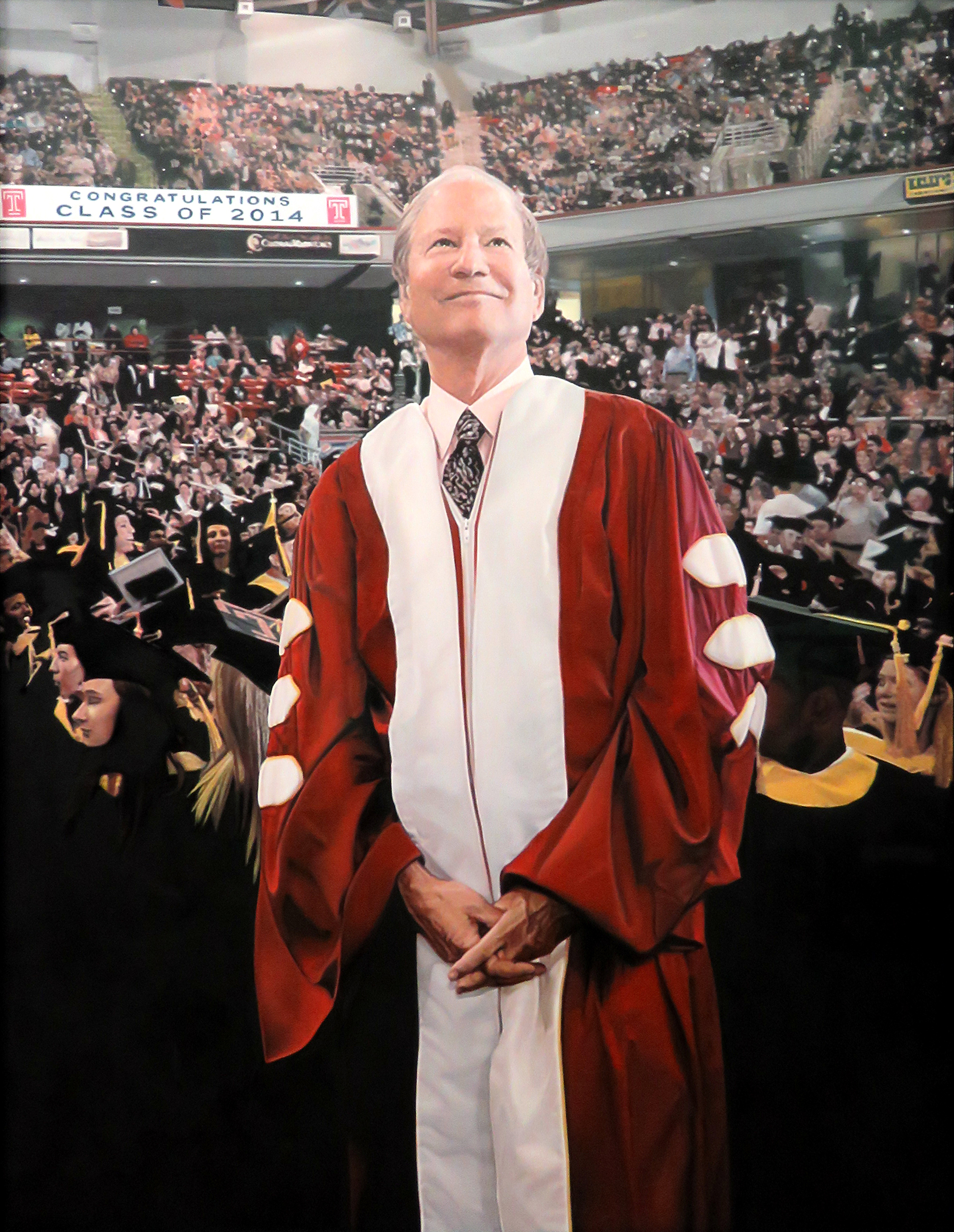
“Recognized, respected, and loved.” That’s how Lewis Katz, CST ’63, described Temple University in his 2014 award-winning commencement address—and it’s how Temple describes him.

A proud Temple graduate, Katz earned his BS in biology in 1963 before graduating first in his law school class at Dickinson School of Law. His career spanned law, sports, media, publishing, and philanthropy, but Temple remained at the center of his life.

By establishing the Katz Foundation, he supported education, medical research, and community programs for more than 25 years—building schools, Boys & Girls Clubs, and Jewish Community Centers in Camden and beyond. He served on national boards, including the Boys & Girls Clubs of America, The National Constitution Center, and the NBA Board of Governors, while also giving his time and leadership to Temple University Health System and Fox Chase Cancer Center.

In 2014, Temple awarded Katz an honorary doctoral degree, recognizing a lifetime of service. His final gift of $25 million—the largest in Temple’s history—endowed the medical school and its dean’s chair.

The values Lewis Katz embodied—determination, impact, and generosity—are the same values that define Katz-educated physicians, researchers, and medical professionals. In 2015, Temple renamed its medical school the Lewis Katz School of Medicine to honor his vision and legacy.