
Over the course of Dr. Brown’s nearly 50-year career, he has studied some of the most complex infectious diseases, including leprosy, malaria and HIV, contributing to research aimed at protecting military personnel and improving public health.
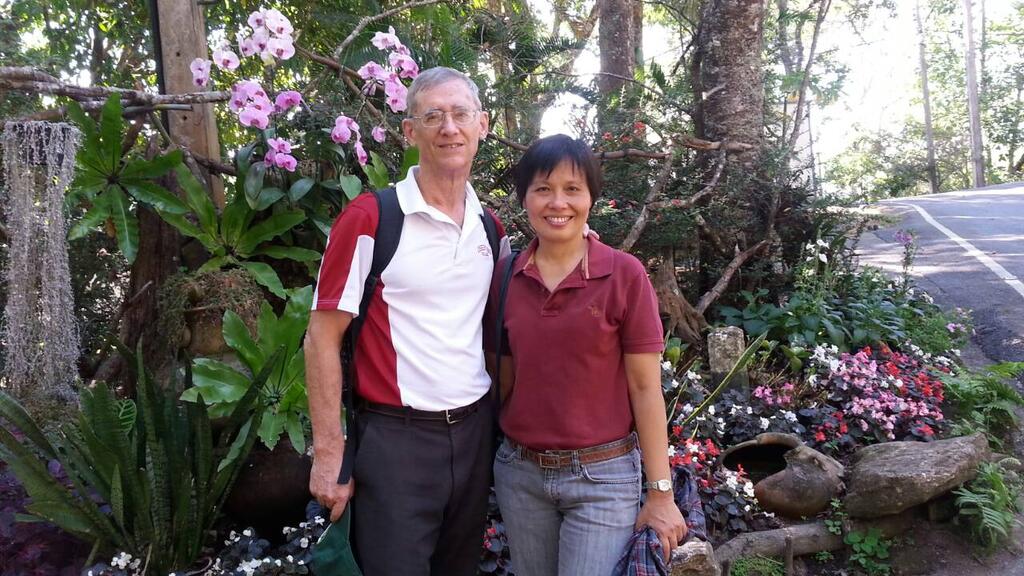
While his father, who was also named Arthur E. Brown Jr., graduated from Temple Medical School in 1943 and had a career in cardiology and insurance medicine, the younger Brown initially chose a different path: studying religion at Dartmouth.
“I avoided following my father and going into the medical track, but I was good at sciences and, after I graduated from Dartmouth, I realized that I wanted to be a doctor,” said Brown. “Temple, I think, because of my father's connection, was generous enough to accept me.”
He went on to graduate with honors from Temple School of Medicine in 1977 and did his internal medicine residency at SUNY Upstate Medical Center in Syracuse. Because he wanted to work overseas, he earned a master’s in tropical public health from Harvard School of Public Health. He then joined a research team led by the University of Illinois at Chicago studying the immunology and epidemiology of leprosy in Northern Thailand.
“I saw patients at a leprosy hospital on the outskirts of Chiang Mai,” he said. “It was in the middle of a river, since there is a history of stigma and ostracism around the disease. We did skin biopsies for some protocol-driven studies. I also did epidemiology as part of a field team with Thai nurses. I had never seen a case of leprosy before joining this project.”
That experience led him to Chicago for an infectious disease fellowship. Meanwhile he married Linda, a doctor from Northern Thailand, and post-fellowship returned to Thailand as a physician at a Khmer refugee hospital on the border where she worked in the local government hospital. Looking to continue working in Thailand, Brown found one as a a field clinician with a team working toward a malaria vaccine at the U.S. Armed Forces Research Institute of Medical Sciences (AFRIMS) in Bangkok. About a year later he enlisted in the U.S. Army Medical Corps, assigned to continue the malaria work in Bangkok.
Brown’s military career spanned from 1987 to 2012, and included posts as deputy chief of immunology at AFRIMS, leader of diagnostic serology and retrovirology services at Walter Reed Army Institute of Research in Washington, chief of retrovirology at AFRIMS and vaccine product manager at Fort Detrick. He ended his career with a return to AFRIMS as deputy commander for science, and served as acting commander. Since retiring from the Army, Linda and he stayed in Bangkok where she continues to work as a radiologist. They have two children, one living in the US and the other in Thailand.
Along the way, his infectious diseases research and patient care benefited people in Thailand, where he spent around half of his career, as well as in the U.S. and around the world.
Q: Why was your work on infectious diseases like malaria and HIV critical not just for the Army but also for communities you interacted with?
Dr. Brown: Malaria is a major threat for military forces when they go to the tropics. There are also diseases like diarrheas and mosquito-borne illnesses like dengue fever.
HIV had its own history that got very political in the U.S. At one point, the research was moved away to the National Institutes of Health (NIH) but the funding was returned about a year later when a lot of political clout was thrown at that. The military had a lot of expertise and was able to work in foreign countries where these epidemics were actually moving much faster than in the U.S. What the U.S. military wants are ways to protect U.S. sailors and soldiers from getting sick and, if possible, from getting infected.
While vaccine development is very important for the military, many vaccines that have been key for public health in general started with efforts in the military.
We created what was at the time the biggest vaccine trial in the world for an HIV vaccine, which had 16,000 people in Thailand and ran for nine years. I was the lead American military person in Thailand for the first four years of that program.
For the first time, an HIV vaccine was shown to be protective — though only moderately so — against infection with HIV. It’s a very difficult problem to create a vaccine against a retrovirus. These statistically valid findings breathed new life into the HIV vaccine development community. It was not a product that was ever put on the market, though. The road continues to be difficult and a usable vaccine has not yet been reached.
I’m proud of my part in this large effort, which involved a close collaboration between the U.S. Army through the Walter Reed Army Institute of Research, the Thai Army, the Thai Ministry of Public Health, Thai universities, and vaccine manufacturers.
Q: Looking back, how did Temple influence your career?
At that time, Temple had a program that gave incoming students the chance to work alongside local physicians who had connections to Temple. I worked with two pediatricians at Einstein Hospital in Philadelphia. This program was very useful. Sometimes you have to decide on your careers without knowing much about what the professionals really do. I had a chance to get a glimpse at the working end of the career.
The most influential person at Temple was my anatomy teacher, Carson Schneck. I was his lead student and helped with the teaching his gross anatomy class. He and his team were great teachers and I learned so much. The way they taught just has always left a really good feeling with me about the impact good teaching can make on students. I had never seen anybody who could call someone from the back of the room by their name. He also taught radiologists and used the new imaging techniques they were developing to teach them anatomy.
I also recall an elective with a clinical oncologist at Temple Hospital in my second or third year. We met weekly with patients who had cancer. The conversations with these patients were moving, and the follow-up discussions opened doors to diverse feelings toward disease, pain, relationships, and more. Our mentor was a good role model, and these guided sessions helped improve our communication skills and nurtured the nascent empathy we carried.
Another thing that impressed me about Temple was knowing that the school accepted David Hartman, a blind student, who was a year ahead of me. [Hartman graduated with his MD in 1976 and went on to become a psychiatrist.] That was quite controversial. Temple accepted him by expanding the class by one. I didn’t know him but I heard he did excellently. You could see what it did with his class. I've heard that a lot of his classmates would sit with him and describe slides showing histology, for example. Faculty did too. It was just remarkable that the school was willing to commit itself to his education. That impressed me a lot.
Q: Finally, why did you make a generous gift to honor your father with a scholarship in his name?
The debt that people get when they go to medical school drives them away from their ability to make a free choice about what they want to do with their career, where they want to work and in what specialty. The scholarship seemed to be a way to help a few people to be more free to make choices that will be better for the people they want to help with their specialty. I think my father would be happy to see this.
I’m grateful that Temple gave me the opportunity to be a doctor and gave me a good medical education. It started me on that path for the rest of my career.